Email marketing, while a powerful tool, often presents hurdles. Low open rates, high bounce rates, and poor click-through rates are common frustrations for marketers. This guide tackles seven prevalent email marketing challenges, providing practical strategies and actionable solutions to boost your campaign effectiveness and achieve better results.
We’ll delve into the root causes of these problems, exploring techniques for crafting compelling subject lines, maintaining a healthy email list, creating engaging content, and optimizing your calls to action. By understanding and implementing these solutions, you can transform your email marketing from a source of frustration into a powerful engine for growth.
Low Open Rates
Low email open rates are a common challenge for marketers. A low open rate indicates that your emails aren’t effectively capturing the attention of your subscribers, leading to missed opportunities for engagement and conversions. Several factors contribute to this problem, and addressing them requires a multi-pronged approach focusing on subject line optimization and overall email strategy.
Reasons for Low Email Open Rates
Several factors can contribute to low email open rates. Poor subject line creation is a major culprit. Unengaging or misleading subject lines often lead to emails being ignored. Technical issues, such as emails landing in spam folders due to poor sender reputation or email deliverability problems, also significantly impact open rates. Furthermore, sending emails too frequently or at inappropriate times can lead to subscriber fatigue and decreased engagement. Finally, irrelevant or low-quality email content that doesn’t meet subscriber expectations will naturally result in lower open rates.
Crafting Compelling Email Subject Lines
Creating compelling subject lines involves understanding your audience and crafting messages that resonate with their interests and needs. Focus on clarity, brevity, and personalization. Use strong verbs and create a sense of urgency or intrigue. A/B testing different subject lines is crucial for determining what works best for your specific audience. Consider incorporating emojis strategically, as they can improve visibility in crowded inboxes, but use them sparingly and appropriately. Finally, ensure your subject lines accurately reflect the email’s content to avoid misleading recipients.
Examples of Successful Subject Line A/B Testing
Let’s say you’re promoting a new product launch. You might A/B test two subject lines: “Introducing the New X-Pro!” versus “Get Your Hands on the X-Pro – First Look!”. The second subject line, with its sense of exclusivity and action, might outperform the first. Another example could involve testing personalization. “Hi [Name], Your Personalized Recommendations Are Here!” might outperform a generic subject line like “New Product Recommendations.” Analyzing the results of these tests helps identify which approach resonates better with your audience. Always track key metrics such as open rates, click-through rates, and conversions to understand the true impact of each subject line variation.
Series of Email Subject Lines Targeting Different Demographics
Consider segmenting your audience based on demographics like age and interests. For a younger demographic (18-25) interested in fashion, you might use subject lines like “🔥 Hottest Trends This Week!”, or “✨ Style Upgrade: Get the Look!”. For an older demographic (55+) interested in travel, you might opt for “✈️ Relaxing Getaways: Discover Your Dream Vacation” or “Discover Hidden Gems: [Location] Travel Guide”. These tailored subject lines cater to the specific interests and preferences of each group, improving the chances of capturing their attention.
Subject Line Length Strategies
| Subject Line Length | Effectiveness | Pros | Cons |
|---|---|---|---|
| Short (Under 50 characters) | Often High | High mobile readability, less likely to be truncated | May lack detail, can seem less engaging |
| Medium (50-70 characters) | Generally High | Good balance of detail and readability | Slightly higher risk of truncation on some platforms |
| Long (Over 70 characters) | Can Vary Significantly | More detail, potentially higher engagement if content is compelling | High risk of truncation, can appear spammy |
High Bounce Rates
High bounce rates in email marketing indicate that a significant portion of your emails aren’t reaching their intended recipients. This can severely damage your sender reputation, leading to fewer emails landing in inboxes and ultimately hindering your marketing efforts. Understanding the types of bounces, implementing robust list hygiene practices, and utilizing email verification services are crucial for mitigating this issue.
Email bounces are broadly categorized into two main types: hard bounces and soft bounces. Hard bounces are permanent delivery failures, indicating the email address is invalid or non-existent. Soft bounces, on the other hand, are temporary delivery failures, often due to a full inbox, server issues, or the recipient’s email provider blocking the message. Understanding this distinction is key to effective list management.
Types of Email Bounces and Their Causes
Hard bounces stem from permanently invalid email addresses. These addresses may be mistyped, no longer in use, or associated with a defunct email server. Common causes include typos in the email address, deactivated accounts, and the recipient’s domain ceasing to exist. Soft bounces, conversely, are temporary delivery failures. These can be caused by a full inbox, temporary server problems, or spam filters flagging the email. Addressing soft bounces often involves retrying delivery after a period of time.
Best Practices for Email List Hygiene and Maintenance
Maintaining a clean and accurate email list is paramount to email marketing success. Regular list hygiene involves proactively identifying and removing invalid email addresses to prevent bounces and maintain a high sender reputation. This includes employing a double opt-in process for new subscribers, which verifies email addresses and reduces the risk of invalid entries. Additionally, segmenting your list based on engagement can help identify inactive subscribers who may no longer be interested in your emails, allowing for targeted removal or re-engagement strategies. Regularly reviewing your bounce rates and unsubscribes provides valuable insights into the health of your email list.
Steps Involved in Cleaning an Email List to Reduce Bounces
Cleaning your email list is an iterative process. First, identify hard and soft bounces through your email marketing platform’s reporting. Then, segment your list based on bounce type. For hard bounces, immediately remove these addresses. For soft bounces, you can attempt re-delivery after a set period (e.g., a week or two). If the email continues to bounce, remove it. Finally, use email verification services (discussed below) to validate the remaining addresses. Remember to document your cleaning process to ensure consistency and track improvements over time.
Comparison of Email Verification Services
Several email verification services are available, each with varying features and pricing. Some services offer real-time verification, allowing you to check email addresses as they’re submitted. Others provide bulk verification, ideal for cleaning existing lists. Features to consider include accuracy rates, speed of verification, pricing models, and integration with your email marketing platform. Comparing services based on these criteria is essential for selecting the best option for your needs. For example, a service with a higher accuracy rate might justify a higher price if it significantly reduces the number of false positives.
Checklist for Preventing and Addressing Email Bounces
A proactive approach is essential. This checklist can help:
- Use a double opt-in process for new subscribers.
- Regularly review bounce rates and unsubscribe rates.
- Segment your email list and target inactive subscribers.
- Employ email verification services to identify and remove invalid addresses.
- Implement a bounce management strategy, including retrying soft bounces and removing hard bounces.
- Monitor your sender reputation and address any issues promptly.
- Maintain accurate and up-to-date contact information.
- Ensure your email content is engaging and relevant to avoid spam filters.
Low Click-Through Rates
Low click-through rates (CTRs) indicate that your email content isn’t effectively engaging recipients and motivating them to take action. This can stem from various factors, including poor design, uninspiring calls to action, and a lack of personalization. Addressing these issues is crucial for maximizing the return on your email marketing investment.
Creating Engaging Email Content
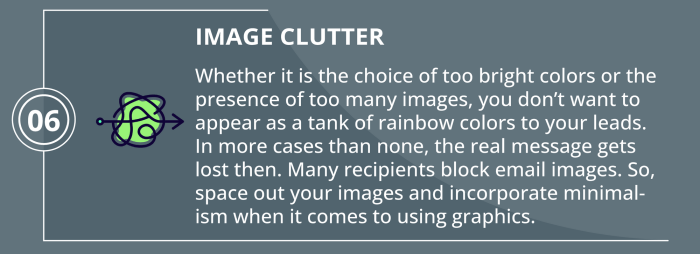
Crafting compelling email content requires a focus on clear messaging, relevant visuals, and a strong understanding of your audience’s needs and interests. Begin by ensuring your subject line accurately reflects the email’s content and sparks curiosity. The email body should then build upon that intrigue, using concise paragraphs, strong visuals, and a clear hierarchy of information. Consider incorporating storytelling techniques to connect with your audience on an emotional level and make your message more memorable. High-quality images or short, engaging videos can also greatly enhance the visual appeal and click-through potential.
Effective Calls to Action
The call to action (CTA) is the crucial element that guides recipients toward the desired action. A poorly designed or unclear CTA can significantly hinder click-through rates. Instead of generic CTAs like “Learn More,” opt for action-oriented and specific phrases. For example, instead of “Learn More,” consider using “Get Your Free Guide Now,” “Shop the Sale,” or “Book Your Consultation Today.” The CTA should be visually prominent, using contrasting colors and clear button designs to stand out from the email’s background. Consider A/B testing different CTA button colors and phrasing to determine what resonates best with your audience.
Personalizing Emails
Personalization is key to improving engagement and click-through rates. Using the recipient’s name in the greeting is a simple yet effective starting point. However, more advanced personalization strategies involve segmenting your audience based on demographics, purchase history, or website behavior. This allows you to tailor the email content and CTAs to resonate more effectively with specific segments. For example, an email promoting a new winter coat would be more relevant to recipients identified as living in colder climates. Dynamic content, which automatically adjusts the email content based on individual recipient data, can further enhance personalization.
A/B Testing for Optimization
A/B testing is an invaluable tool for optimizing email content and CTAs. This involves sending two versions of your email to a split sample of your audience and comparing the results. You can test different subject lines, headlines, body copy, CTAs, and even email layouts. By analyzing the data, you can identify which version performs better and use that information to improve future campaigns. For example, you might A/B test two different subject lines to see which one generates a higher open rate and click-through rate. Continuously testing and iterating based on results is crucial for sustained improvement.
Best Practices for Email Design
To maximize click-through rates, prioritize a clean and visually appealing email design.
- Mobile Optimization: Ensure your email renders correctly on all devices, as a significant portion of emails are opened on smartphones.
- Clear Hierarchy: Use headings, subheadings, bullet points, and whitespace to create a clear visual hierarchy, making it easy for recipients to scan and digest the information.
- Compelling Visuals: Incorporate high-quality images and videos, but ensure they are optimized for fast loading times.
- Strategic Use of Color: Use color strategically to draw attention to important elements, such as your CTA button.
- Consistent Branding: Maintain consistency with your brand’s visual identity to reinforce brand recognition and trust.
Summary

Mastering email marketing requires consistent effort and a willingness to adapt. By addressing the common pitfalls discussed – low open rates, high bounce rates, and low click-through rates – you’ll significantly improve your campaign performance. Remember, continuous monitoring, A/B testing, and a commitment to list hygiene are key to long-term success. Implement these strategies, and watch your email marketing ROI soar.