Unleash your sports car’s full potential by mastering its suspension. This guide delves into common suspension issues, providing clear, step-by-step instructions for diagnosis and quick fixes. Learn to identify symptoms, perform visual inspections, and make crucial adjustments to significantly improve your car’s handling and stability. Whether you’re a seasoned enthusiast or a novice driver, this guide empowers you to take control of your sports car’s performance.
We’ll cover essential checks for fluid levels and component wear, followed by four straightforward adjustments that can dramatically enhance your driving experience. Understanding the impact of ride height and tire pressure will give you the confidence to fine-tune your car’s handling to match your driving style and road conditions. This isn’t about complex modifications; it’s about making informed, effective changes to optimize your sports car’s performance.
Identifying Suspension Issues in Sports Cars

Maintaining a sports car’s performance relies heavily on a properly functioning suspension system. A compromised suspension not only impacts handling and control but also compromises safety and can lead to premature wear on other components. Recognizing the signs of suspension trouble is crucial for timely intervention and preventing more extensive damage.
Understanding the symptoms of suspension issues requires awareness of how different components contribute to overall vehicle stability and ride quality. Identifying whether the problem originates in the front or rear suspension often narrows down the potential causes.
Front and Rear Suspension Problem Symptoms
Front suspension problems often manifest as noticeable handling issues. These can include pulling to one side during braking, uneven tire wear (particularly on the front tires), a wandering or unstable feeling at higher speeds, and a noticeable bounce or vibration from the front end, especially when going over bumps. Rear suspension problems, on the other hand, might present as instability during cornering, excessive rear-end sway, or a feeling of looseness or floatiness in the rear of the car. Uneven tire wear on the rear tires is also a key indicator. It’s important to note that some symptoms can overlap, making a thorough inspection essential.
Visual Inspection of Suspension Components
A visual inspection is the first step in diagnosing suspension problems. This involves carefully examining key components for signs of damage, wear, or looseness. This step is straightforward and can often pinpoint the source of the issue before more advanced diagnostic techniques are necessary.
| Component | Common Problem | Visual Inspection Method | Potential Consequence of Neglect |
|---|---|---|---|
| Shocks/Struts | Leaks, damage to the shaft, worn bushings | Inspect for fluid leaks around the shaft and seals. Check for damage to the shaft itself, and visually inspect bushings for cracks or excessive wear. Check for excessive movement or play. | Poor handling, reduced braking performance, premature tire wear, and potential failure leading to loss of control. |
| Springs | Fractures, sagging, rust | Carefully examine the springs for cracks, rust, or any signs of deformation. Measure the height of each spring to check for sagging (compare to specifications). | Uneven ride height, poor handling, reduced braking performance, and potential spring failure. |
| Bushings | Tears, cracking, excessive play | Visually inspect bushings for cracks, tears, or excessive wear. Check for excessive movement or play in the suspension components. | Poor handling, excessive noise, premature wear of other suspension components, and potential failure leading to loss of control. |
| Control Arms/Links | Bent, cracked, loose ball joints | Check for any bending, cracks, or damage to the control arms. Inspect ball joints for excessive play or looseness using a pry bar (carefully!). | Poor handling, instability, uneven tire wear, and potential failure leading to loss of control. |
Checking Suspension Fluid Levels and Condition
Checking the fluid levels and condition in shock absorbers and struts is crucial. Low fluid levels indicate a leak, and discolored or contaminated fluid suggests internal damage. This check requires a bit more technical knowledge and appropriate tools, but it provides valuable insight into the health of the shock absorbers. For example, if you notice that the fluid is milky or foamy, this usually points to moisture contamination and likely internal damage to the shock absorber. This necessitates replacement. If the fluid level is low, a leak is the most likely cause. Regular inspection and maintenance, based on the manufacturer’s recommendations, will help to avoid more significant problems.
Quick Adjustments for Improved Handling

Fine-tuning your sports car’s suspension can dramatically improve its handling characteristics. Even small adjustments can yield noticeable differences in responsiveness, stability, and overall driving experience. This section details four quick adjustments you can make to optimize your car’s performance on the road.
Ride Height Adjustment and its Impact on Handling and Stability
Ride height significantly influences a sports car’s handling and stability. Lowering the car lowers the center of gravity, reducing body roll during cornering and improving responsiveness. This makes the car feel more agile and precise. However, excessively lowering the ride height can negatively impact ride comfort, potentially leading to a harsher ride and reduced ground clearance, limiting your ability to navigate uneven roads or speed bumps. Conversely, raising the ride height increases ground clearance and improves ride comfort, but it can lead to increased body roll and a less responsive feel, making the car feel less nimble. The ideal ride height is a balance between these factors, often dependent on driving style and road conditions. For example, a track-focused setup might prioritize a lower ride height for enhanced handling, while a daily driver might benefit from a slightly higher setting for improved comfort.
Tire Pressure Adjustment and its Effect on Handling and Grip
Correct tire pressure is crucial for optimal handling and grip. Under-inflated tires increase the contact patch, improving grip but potentially leading to increased rolling resistance and reduced fuel efficiency. Over-inflation decreases the contact patch, reducing grip and making the car feel less stable, especially in corners. The optimal tire pressure is typically found on a sticker located on the driver’s side doorjamb or in your owner’s manual. However, this pressure is often a compromise between comfort and fuel economy. For enhanced handling, especially on a track, slightly increasing the tire pressure within the manufacturer’s recommended range can improve responsiveness and reduce body roll. However, this will slightly reduce grip.
| Tire Pressure | Handling Characteristics | Grip | Ride Comfort |
|---|---|---|---|
| Under-inflated (below recommended) | Sluggish, increased body roll | Increased (initially) | Softer |
| Recommended Pressure | Balanced handling, good grip | Good balance | Good balance |
| Over-inflated (above recommended) | Responsive, reduced body roll | Reduced | Harsh |
Checklist for Suspension Adjustments
Before making any adjustments, consult your owner’s manual for specific recommendations and torque specifications. Improper adjustments can damage your suspension components.
- Tools Required: Jack, jack stands, torque wrench, tire pressure gauge, possibly adjustable wrench(es) for ride height adjustment (depending on your car’s design).
- Procedure for Ride Height Adjustment: Securely jack up the vehicle, place it on jack stands, locate the ride height adjustment points (often threaded sleeves or adjustable suspension links), carefully adjust the ride height using the appropriate tools, ensuring symmetrical adjustments on both sides of the vehicle, lower the vehicle, and check for proper clearance.
- Procedure for Tire Pressure Adjustment: Use a reliable tire pressure gauge to check the pressure in each tire. Adjust the pressure using a portable air compressor or at a gas station air pump. Ensure all four tires are at the correct pressure.
Advanced Suspension Tuning Techniques (Optional Adjustments)
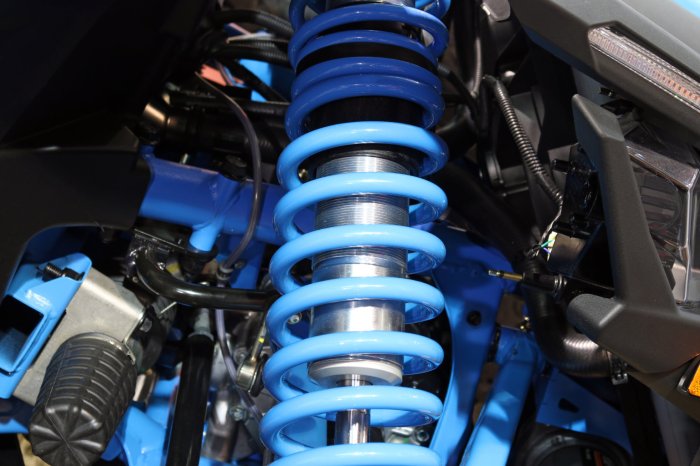
Fine-tuning your sports car’s suspension beyond the basic adjustments can significantly enhance its performance and handling characteristics. This section delves into more advanced techniques, offering a deeper understanding of suspension components and their interaction. Remember, these adjustments should only be undertaken if you possess the necessary mechanical skills and tools, and always prioritize safety.
This section will explore different shock absorber types, sway bar adjustments, camber and caster angle adjustments, and a decision-making process for choosing the right adjustments based on driving style and conditions.
Shock Absorber Types and Their Effects on Handling
Different shock absorbers offer varying degrees of damping, influencing ride comfort and handling. Gas-charged shocks generally provide better control and responsiveness than oil-filled shocks, particularly during aggressive driving. Coilover shocks offer adjustability, allowing fine-tuning of damping force. Choosing the right shock absorber depends on your driving style and the type of roads you frequently encounter. For example, a track-focused setup might utilize stiffer, gas-charged shocks, while a street-oriented setup might benefit from a more compliant, oil-filled shock.
Sway Bar Adjustments and Their Impact on Body Roll and Responsiveness
Sway bars, also known as anti-roll bars, connect the suspension on opposite sides of the vehicle, reducing body roll during cornering. Adjusting sway bar settings involves changing the bar’s stiffness, typically by altering its mounting points or using different sway bars altogether. Stiffer sway bars reduce body roll, improving handling responsiveness but potentially sacrificing ride comfort. Softer sway bars increase body roll, leading to a more comfortable ride but potentially less precise handling. The optimal setting depends on the balance between comfort and performance desired.
Camber and Caster Angle Adjustments
Adjusting camber and caster angles requires specialized tools and a thorough understanding of suspension geometry. Improper adjustment can negatively impact tire wear, handling, and vehicle stability. Camber refers to the angle of the tire relative to the vertical axis, while caster refers to the angle of the steering axis relative to the vertical axis.
Adjusting Camber:
- Tools Required: Camber gauge, adjustable wrench, jack stands.
- Procedure: Loosen the suspension mounting bolts, adjust the camber using the adjusting mechanism (specific to the vehicle), measure camber with the gauge, tighten bolts, and re-check alignment.
- Risks: Incorrect adjustment can lead to uneven tire wear, reduced handling, and compromised stability.
Adjusting Caster:
- Tools Required: Caster gauge, adjustable wrench, jack stands.
- Procedure: Loosen the appropriate suspension components, adjust the caster using the adjusting mechanism (specific to the vehicle), measure caster with the gauge, tighten bolts, and re-check alignment.
- Risks: Incorrect adjustment can affect steering feel, straight-line stability, and tire wear.
Decision-Making Flowchart for Suspension Adjustments
The choice of suspension adjustments depends heavily on individual driving preferences and typical road conditions. This flowchart Artikels a decision-making process.
[Imagine a flowchart here. The flowchart would start with a question like “What is your primary driving style? (Track/Street/Mixed)”. Branches would lead to further questions about preferred handling characteristics (e.g., responsive/comfortable), and then finally to recommended adjustments (e.g., stiffer sway bars and shocks for track driving, softer setup for street driving). The final output would be a summary of the recommended suspension adjustments.]
Closing Summary

By understanding the fundamentals of sports car suspension and implementing the simple adjustments Artikeld in this guide, you can significantly enhance your vehicle’s performance and safety. Regular inspection and proactive maintenance are key to preventing more serious issues and ensuring your sports car remains a source of enjoyment for years to come. Remember, understanding your car’s suspension is not just about improved handling; it’s about ensuring a safe and exhilarating driving experience.