E-commerce security is paramount. A single breach can devastate a business, eroding customer trust and inflicting significant financial damage. This guide tackles four prevalent e-commerce security challenges: safeguarding customer data, preventing payment fraud, securing website infrastructure, and maintaining PCI DSS compliance. We’ll explore practical strategies and best practices to bolster your online store’s defenses and build a secure, trustworthy environment for both your business and your customers.
By understanding the vulnerabilities and implementing robust security measures, you can significantly reduce your risk exposure. This involves not only technical solutions but also a comprehensive approach to security awareness and employee training. This guide aims to provide a clear, actionable path towards a more secure online presence.
Protecting Customer Data
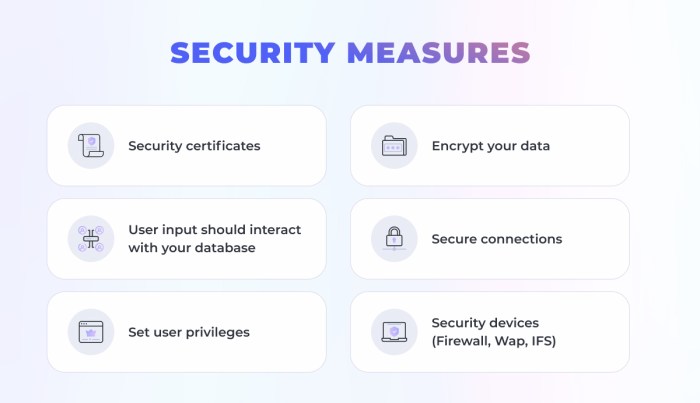
E-commerce thrives on trust. Customers entrust businesses with sensitive personal and financial information, making robust data protection paramount. Failure to safeguard this data can lead to devastating consequences, including financial losses, reputational damage, and legal repercussions. This section details best practices for securing customer data in the e-commerce landscape.
Common Data Breaches and Their Impact
Data breaches in e-commerce manifest in various ways, from SQL injection attacks compromising databases to phishing scams targeting customer credentials. A common attack vector involves exploiting vulnerabilities in poorly secured web applications. The impact of such breaches can be significant. For example, a breach leading to the exposure of credit card details can result in substantial financial losses for both the business and its customers. Reputational damage can be equally severe, leading to a loss of customer trust and decreased sales. Furthermore, businesses face hefty fines and legal battles resulting from non-compliance with data protection regulations like GDPR and CCPA. The loss of intellectual property, such as proprietary algorithms or customer lists, is another serious consequence.
Data Encryption: At Rest and In Transit
Protecting data requires a multi-layered approach, with encryption being a cornerstone. Data encryption at rest protects data stored on servers and databases, while encryption in transit safeguards data during transmission over networks. For data at rest, strong encryption algorithms like AES-256 should be implemented. This involves encrypting sensitive data before it’s stored, ensuring that even if a database is compromised, the data remains unreadable without the decryption key. For data in transit, HTTPS (using TLS/SSL) is essential. HTTPS encrypts the communication between the customer’s browser and the e-commerce website, preventing eavesdropping on sensitive information like passwords and credit card numbers. Implementing robust key management practices is crucial for both at-rest and in-transit encryption to ensure the security of the encryption keys themselves.
Authentication and Authorization Methods
Robust authentication and authorization mechanisms are crucial for verifying customer identities and controlling access to their data. Strong password policies, requiring a minimum length, complexity, and regular changes, are fundamental. Multi-factor authentication (MFA), requiring multiple forms of verification (e.g., password and a one-time code from a mobile app), adds a significant layer of security. Authorization ensures that only authorized users can access specific data. Role-based access control (RBAC) is a common approach, assigning different access levels based on user roles within the organization. For example, a customer service representative might have access to customer order details but not to financial information. Implementing these measures significantly reduces the risk of unauthorized access and data breaches.
Comparison of Data Encryption Methods
| Algorithm | Key Size (bits) | Speed | Security Level |
|---|---|---|---|
| AES | 128, 192, 256 | Fast | High |
| RSA | 1024, 2048, 4096 | Slower than AES | High (for appropriate key sizes) |
| 3DES | 168 | Slower than AES | Medium (considered less secure than AES-256) |
| ECC | Variable | Faster than RSA for equivalent security | High |
Preventing Payment Fraud

E-commerce businesses face significant risks from payment fraud, impacting profitability and customer trust. Implementing robust fraud prevention strategies is crucial for maintaining a secure and reliable online marketplace. This section will explore key strategies, technologies, and compliance standards to mitigate these risks.
Preventing payment fraud requires a multi-layered approach combining technological solutions, procedural safeguards, and a commitment to regulatory compliance. This approach minimizes losses and strengthens customer confidence in your platform.
Fraud Detection and Prevention Strategies
Effective fraud detection involves analyzing transaction data for suspicious patterns. This analysis typically involves employing machine learning algorithms that identify anomalies in purchase behavior, such as unusually large orders from new accounts or transactions originating from high-risk IP addresses. Additionally, manual review of flagged transactions by trained personnel can catch subtle indicators of fraud that automated systems might miss. Real-time monitoring of transactions allows for immediate responses to suspicious activity, minimizing potential losses. For example, a sudden surge in orders from a specific geographic location, far exceeding typical sales patterns, might trigger an alert for further investigation.
3D Secure and Other Fraud Prevention Technologies
3D Secure (also known as Verified by Visa or Mastercard SecureCode) adds an extra layer of authentication to online transactions. It requires cardholders to verify their identity through a password or one-time code sent to their registered mobile device or email address. This process significantly reduces the risk of unauthorized use of stolen credit card information. Beyond 3D Secure, other technologies such as address verification systems (AVS), which compare the billing address provided with the address on file with the card issuer, and velocity checks, which monitor the frequency of transactions from a single account, contribute to a comprehensive fraud prevention system. Implementing these technologies often involves partnering with payment gateways that offer these features as part of their service.
PCI DSS Compliance and Implementation
Payment Card Industry Data Security Standard (PCI DSS) compliance is not just a recommendation; it’s a necessity for any business processing credit card payments. PCI DSS is a set of security standards designed to ensure the safe handling of cardholder data. Compliance involves implementing a range of security controls, including data encryption, access control restrictions, regular vulnerability scans, and rigorous security audits. Failure to comply can result in significant fines and reputational damage. Practical implementation requires a dedicated security team or the engagement of a qualified security consultant to guide the process and ensure ongoing compliance. Regular training for employees handling sensitive data is also a critical aspect of maintaining PCI DSS compliance.
Secure Payment Processing Flowchart
[Imagine a flowchart here. The flowchart would begin with a customer initiating a purchase. The next step would be payment information entry. This is followed by a fraud detection system check (using algorithms and real-time monitoring). If fraud is suspected, the transaction is flagged for review. If no fraud is suspected, the transaction proceeds to the payment gateway. The gateway processes the transaction and sends confirmation to the merchant. Finally, the order is fulfilled and shipped. The flowchart visually demonstrates the points at which fraud detection is implemented, highlighting the importance of a multi-layered approach.]
Securing the Website Infrastructure
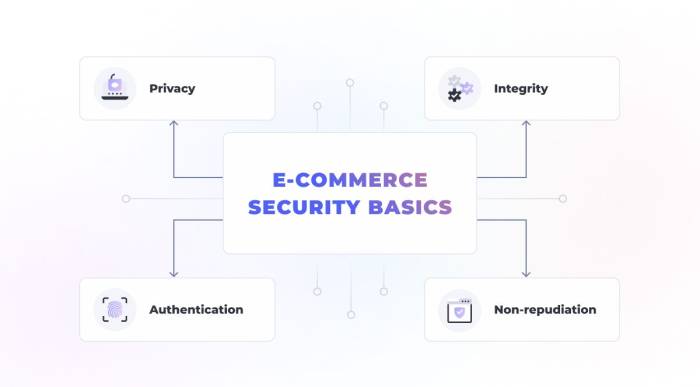
A robust and secure website infrastructure is paramount for any e-commerce business. A compromised website not only risks financial losses through data breaches and downtime but also severely damages customer trust and brand reputation. This section details crucial aspects of securing your website’s infrastructure, focusing on vulnerabilities, protective measures, and best practices.
Website security is a multifaceted issue requiring a layered approach. It’s not simply about protecting against a single type of attack, but about building resilience against a range of threats. This requires understanding common vulnerabilities, implementing preventative measures, and maintaining a vigilant security posture.
Common Website Vulnerabilities and Exploitation Methods
Several common vulnerabilities can compromise website security. SQL injection attacks, for instance, exploit flaws in how a website handles database queries, allowing attackers to manipulate data or gain unauthorized access. Cross-site scripting (XSS) attacks inject malicious scripts into a website, potentially stealing user data or redirecting users to phishing sites. Other vulnerabilities include cross-site request forgery (CSRF), which tricks users into performing unwanted actions, and insecure direct object references (IDOR), which allow access to unauthorized resources. Exploitation methods vary, but often involve crafting malicious input that is then processed by the vulnerable application, leading to data breaches or server compromise. For example, an SQL injection attack might involve inserting malicious code into a search field, modifying the database query to reveal sensitive information.
Implementing Web Application Firewalls (WAFs) and Intrusion Detection Systems (IDS)
Web Application Firewalls (WAFs) act as a security layer between the web application and the internet, filtering malicious traffic and preventing attacks. WAFs examine incoming requests, identifying and blocking malicious patterns based on pre-defined rules or machine learning. Intrusion Detection Systems (IDS), on the other hand, monitor network traffic and system activity for suspicious behavior, alerting administrators to potential security breaches. Both WAFs and IDS provide crucial layers of defense, but their effectiveness depends on proper configuration and integration with other security measures. A well-configured WAF can effectively mitigate many common web application attacks, while an IDS can detect and alert on more sophisticated or less predictable threats. For example, a WAF can block SQL injection attempts by filtering requests containing suspicious SQL syntax, while an IDS might detect unusual login attempts or file access patterns indicating a potential intrusion.
Web Server Configuration and Maintenance Best Practices
Regular updates and patches are essential for maintaining secure web servers. This includes keeping the operating system, web server software, and all applications up-to-date with the latest security patches. Strong passwords and access control measures should be implemented, limiting access to only authorized personnel. Regular security audits and penetration testing are crucial for identifying and addressing vulnerabilities before they can be exploited. Further, regular backups are essential to mitigate data loss in case of a security incident. Implementing a robust logging system helps track system activity and identify potential security breaches. These practices, when combined, create a resilient defense against a wide array of threats. For example, failing to update a vulnerable web server could expose the system to known exploits, potentially leading to a complete compromise.
Secure Website Architecture
A secure website architecture utilizes a layered approach, combining multiple security measures to protect against various threats. This includes a secure web server, a robust web application firewall (WAF), an intrusion detection system (IDS), and secure coding practices. Data encryption both in transit (using HTTPS) and at rest is essential to protect sensitive information. Regular security assessments and penetration testing help identify and address vulnerabilities. The interaction between these components involves the WAF filtering malicious traffic before it reaches the web server, the IDS monitoring system activity for suspicious behavior, and the secure coding practices minimizing vulnerabilities in the web application itself. A well-designed architecture considers not only the technical aspects but also the organizational and procedural elements of security. For instance, a well-defined incident response plan can minimize the impact of a successful attack.
Final Conclusion
Successfully navigating the complexities of e-commerce security requires ongoing vigilance and adaptation. By implementing the strategies Artikeld in this guide—from robust data encryption to proactive fraud prevention and secure website architecture—you can significantly enhance your e-commerce platform’s resilience against threats. Remember, a layered security approach, combined with regular security audits and employee training, is crucial for maintaining a secure and thriving online business. Prioritizing security isn’t just a best practice; it’s a necessity for long-term success in the competitive e-commerce landscape.